


For Pets. For People. For Progress.
King Buck’s Story
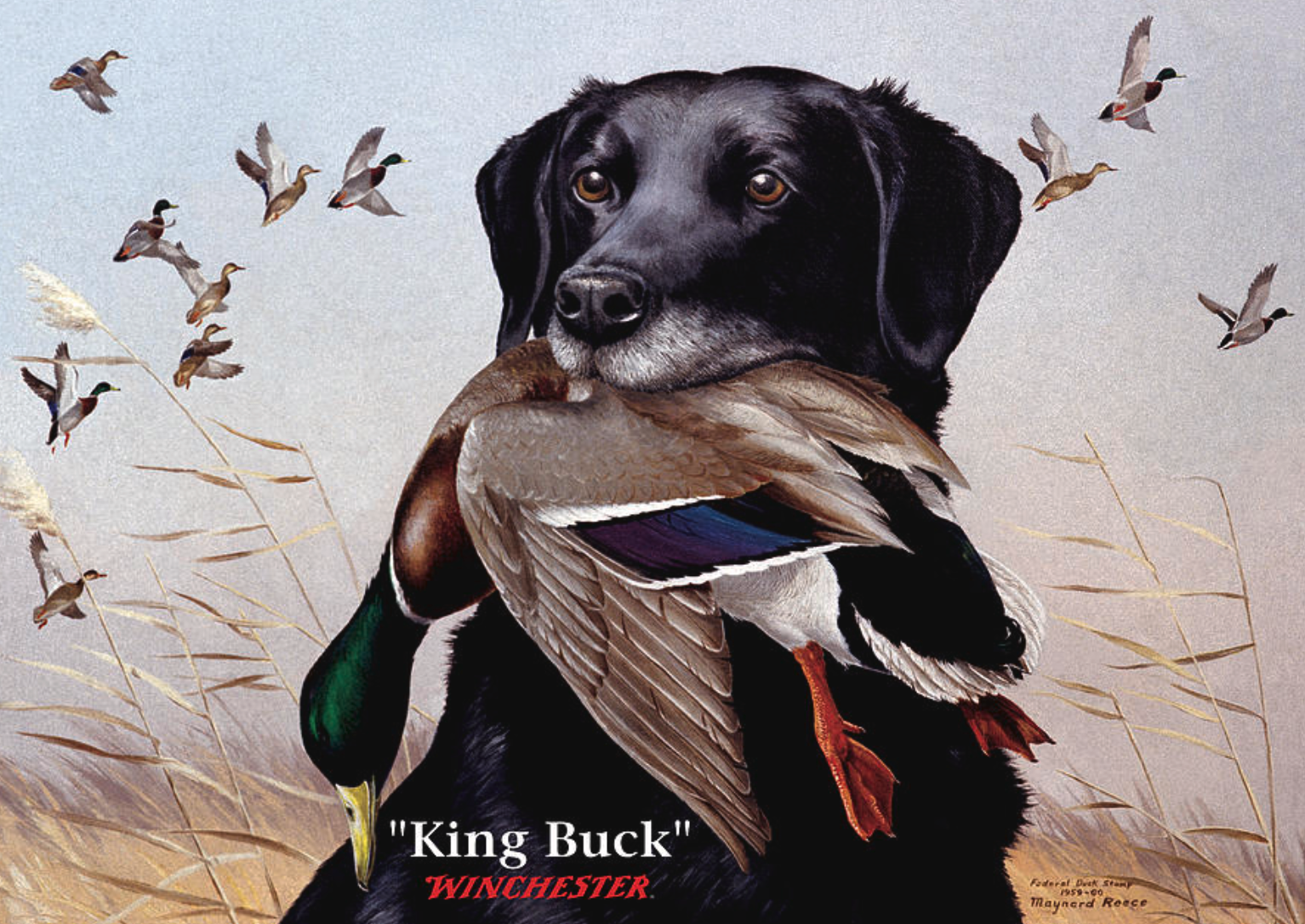
King Buck: From Champion to Catalyst for Discovery
King Buck, a legendary black Labrador retriever from Nilo Kennels, was not only a back-to-back National Retriever Champion—he also helped advance groundbreaking virus research at Cornell’s Baker Institute for Animal Health. In 1959, he became the only dog ever featured on a U.S. Fish and Wildlife Service Duck Stamp, securing his place in history. Owned by John M. Olin—a Cornell alumnus, conservationist, and leader of Winchester Repeating Arms Company—King Buck’s life helped inspire meaningful scientific progress. After surviving a near-fatal case of canine distemper as a puppy, his story motivated Olin to support research to protect dogs from deadly viral diseases. Through his partnership with the first Institute Director, James A. Baker, Olin directly advanced early work at the Baker Institute. King Buck and the dogs of Nilo Kennels played a key role in testing one of the first combination vaccines for canine distemper and canine adenovirus—leading to a nationwide vaccination program in 1960. What began as one dog’s fight for survival became a turning point in science—sparking discoveries that have protected millions of dogs for generations.
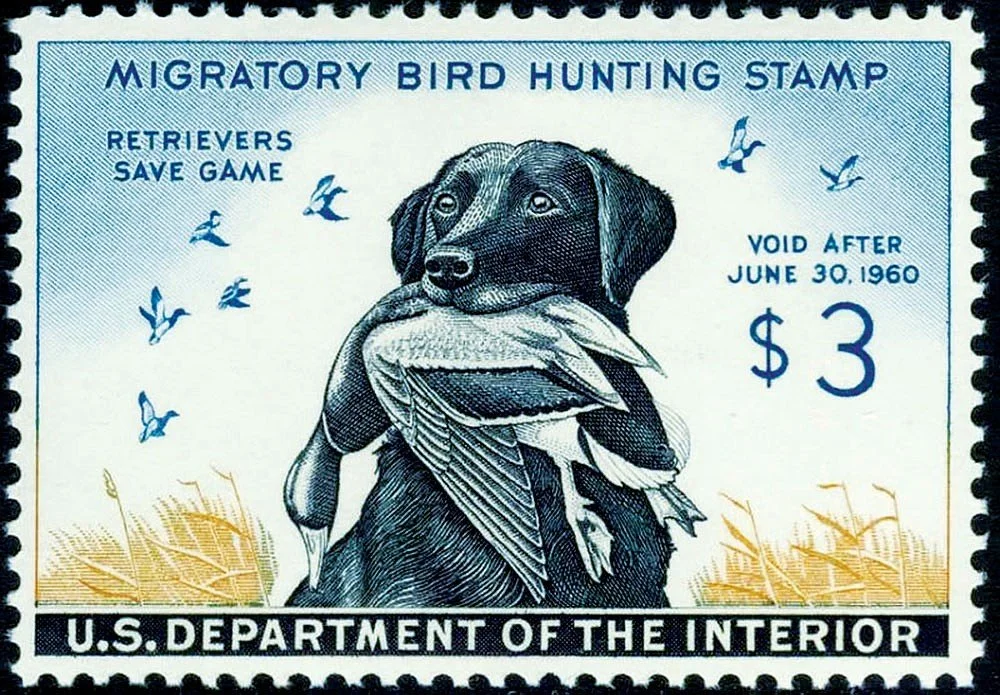
King Buck Honored as First Canine to Appear on a Duck Stamp
King Buck holds a special place in conservation art history as the first hunting dog ever featured on a U.S. Federal Duck Stamp, appearing on the 1959 stamp painted by Maynard Reece.
His inclusion marked a shift in how these stamps—part of the Federal Duck Stamp Program—recognized not just waterfowl, but also the role of working animals in hunting traditions. By featuring a retriever like King Buck, the artwork honored the partnership between hunters and their dogs, highlighting their essential role in retrieving waterfowl and supporting ethical hunting practices.